What Size Dutch Oven for Sourdough? A Baker’s Complete Guide
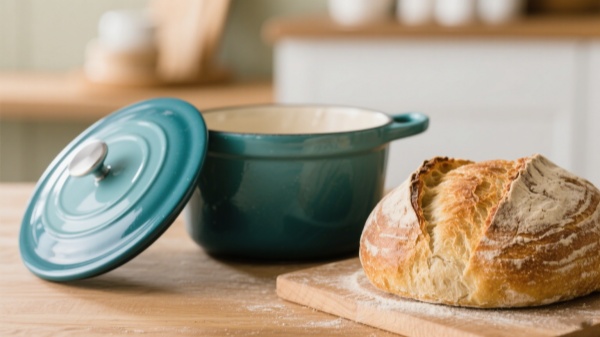
You've done everything right. You've nurtured your starter, perfected your stretch-and-folds, and your dough has had its long, luxurious cold sleep in the fridge. Now, the moment of truth: the bake. But as you stare at your Dutch oven, a nagging question pops into your head: is it... the right size? This single detail, my friend, can be the difference between a loaf that soars and one that spreads.
Let's stop the guesswork. For the classic sourdough loaf most home bakers make (using around 500g of flour), a Dutch oven between 5 and 6 quarts (roughly 4.7 to 5.7 liters) is the undisputed 'sweet spot.' It gives the dough enough room to burst upwards while being snug enough to trap steam effectively.
But the 'sweet spot' isn't a one-size-fits-all solution. How large are the loaves you dream of baking? Do you prefer a classic round boule or a rustic oval bâtard? Let's walk through the science of size together, so you can find the perfect partner for your bread and make every bake a wild success.
The Magic of Size: Why Your Dutch Oven is the Secret to a Perfect Crust and Rise
This isn't just about fitting your dough in a pot. The size of your Dutch oven directly engineers the environment your bread needs to thrive. It’s all about two things: steam and heat.
The Power of Trapped Steam
Think of your Dutch oven as a personal steam-injected oven. As the dough heats up, it releases water. A tight-fitting lid traps this moisture, creating a super-steamy atmosphere. This steam keeps the outer crust of the dough soft and pliable for the first crucial minutes of baking, allowing it to expand to its maximum potential. We bakers call this "oven spring." An appropriately sized pot concentrates this steam right around the loaf for the best possible lift.
A Fortress of Radiant Heat
Heavy cast iron is a master of storing and radiating intense, even heat. The hot walls of the Dutch oven act like a kiln, blasting your dough with energy from all sides. The right amount of space between the dough and the pot walls ensures this radiant heat can circulate perfectly, baking the loaf evenly and creating that deeply caramelized, crackly crust we all crave.
Finding Your 'Sweet Spot': The 5 to 6 Quart Range, Explained
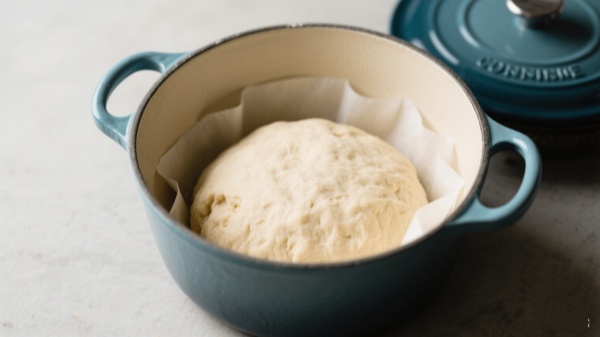
So, why is this 5-6 quart range the go-to recommendation from bakers everywhere? Because it's perfectly scaled for the most common sourdough recipe size: one built on 500 grams of flour, which results in a final dough weighing around 900g to 1kg.
Picture it: when you place your dough inside, there should be about 1-2 inches of clearance between the edge of the dough and the pot walls. This gap is the magic zone. It's close enough that the walls provide support, encouraging the dough to rise up instead of spreading out, yet spacious enough to allow for that glorious oven spring without being constricted.
Better yet, a Dutch oven in this size range is a true kitchen workhorse. It's not just for bread; it’s the perfect vessel for stews, braises, and soups. It's a fantastic investment.
Troubleshooting: "What if My Dutch Oven is Too Big or Too Small?"
Don't panic if the pot you own falls outside the sweet spot! Understanding the consequences can help you adapt.
Scenario 1: My Pot is Too Big (7 Quarts or more)
The Problem: In a cavernous pot, the steam your dough releases becomes diluted. Without concentrated steam, the crust can set too early, limiting the oven spring. The lack of nearby walls also means less support, which can lead to a flatter, "pancaked" loaf.
Baker's Tip:
If you're working with a large Dutch oven, simply increase your dough's recipe size to fill the space better. Alternatively, you can try baking with the pot's lid on for a shorter period to trap the initial burst of steam more effectively.
Scenario 2: My Pot is Too Small (4 Quarts or less)
The Problem: A cramped environment physically restricts the oven spring. Your loaf will rise until it hits the lid, resulting in a flattened, squared-off top. The sides might also scorch where they are pressed directly against the hot cast iron.
The Fix: This is an easy one—just scale down your recipe! A 4-quart pot is absolutely perfect for a smaller loaf made with 300-350g of flour.
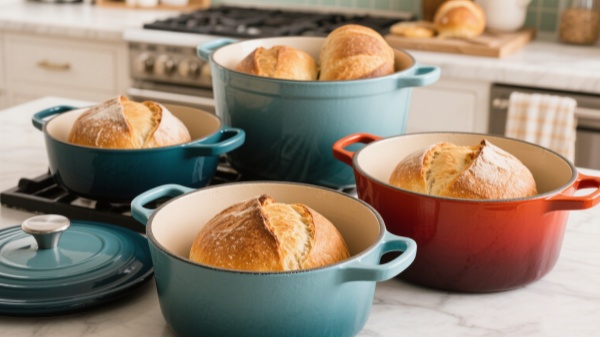
The Great Debate: Round (Boule) vs. Oval (Bâtard)
Once you've settled on a volume, you need to pick a shape. This choice is less about performance and more about the kind of bread you love to make.
Round Dutch Oven
This is the classic, versatile champion. It's designed for baking the traditional round loaf, or boule. Its symmetrical shape ensures the most even heat distribution on a standard stovetop burner and in the oven. If you are buying your very first Dutch oven, make it a 5.5-quart round one. You can't go wrong.
Oval Dutch Oven
If you prefer baking the oblong, rustic bâtard, an oval Dutch oven is your perfect match. This shape yields more uniform slices, perfect for sandwiches. It's also fantastic for roasting a whole chicken or a beef roast. The only minor downside is that it can heat less evenly on a round burner.
Quick-Reference Sizing Chart
Here’s a simple chart to take the guesswork out of it. Find your typical flour amount and see your ideal Dutch oven size.
| Flour Weight | Approx. Dough Weight | Recommended Dutch Oven Size | Best For |
|---|---|---|---|
| 300g - 400g | 600g - 800g | 3.5 - 4.5 Quarts | Small Boule |
| 450g - 550g | 900g - 1.1kg | 5 - 6 Quarts (The Sweet Spot) | Standard Boule / Bâtard |
| 600g - 750g | 1.2kg - 1.5kg | 6.5 - 7.5 Quarts | Large Boule |
| 800g+ (or two loaves) | 1.6kg+ | 8+ Quarts | Oversized Loaves or 2 at once |
Frequently Asked Questions
Can I bake sourdough without a lid on my cast iron?
Yes, but it's more challenging. You'll need to create a steamy environment in your oven, typically by placing a pan of hot water on a lower rack. A Dutch oven with a lid simplifies this process immensely by trapping the moisture from the dough itself, creating a reliable, perfect steam chamber for a great rise.
Does the material of the Dutch oven matter?
Absolutely. Enameled cast iron is the top choice for most bakers. It provides exceptional heat retention and distribution without the need for seasoning and is easy to clean. Bare cast iron is also fantastic but requires regular seasoning and maintenance to prevent rust.
Do I need to preheat my Dutch oven?
Yes, always! Preheating the Dutch oven along with your oven until it's screaming hot (usually 450-500°F or 230-260°C) is the secret to an explosive oven spring. Placing your cool dough into the hot vessel creates an immediate burst of steam and heat, which is crucial for that beautiful, open crumb and crispy crust.
Are there any alternatives to a Dutch oven for sourdough?
Yes, several! A cast iron combo cooker (a deep skillet with another skillet as a lid) is a popular choice. You can also use a heavy, oven-safe pot with a tight-fitting lid, like a clay baker or a thick ceramic pot. The key is any heavy vessel that can trap steam effectively and hold high heat.
Bringing It All Home: Your Perfect Loaf Awaits
Ultimately, choosing the right Dutch oven for your sourdough is a game of matchmaking: matching your pot to your standard recipe, your baking ambitions, and your favorite loaf shape. Don't stress about finding the one, single, "perfect" pot. A "great" pot, like the classic 5.5-quart round, will get you 95% of the way there. The rest of the magic is in your hands, your starter, and your passion for the craft.
So, choose a partner that inspires you, preheat your oven, and go bake loaves that make you—and everyone you share them with—incredibly happy. The real journey starts now. Happy baking!

Solamex — Wholesale Pots and Pans Expertise
Solamex offers wholesale pots and pans, combining durable materials, precise craftsmanship, and flexible product customization. From premium stainless steel to advanced nonstick lines, our catalog is built for both retail distribution and demanding commercial kitchens — ensuring consistency in performance and presentation.
What Size Dutch Oven for Sourdough? The Practical Guide
Flat Bottom Wok vs. Round: Which One Should You Actually Buy?