Quart Pot Mastery: The Ultimate 1-16+ Quart Capacity Guide for Precision Cooking
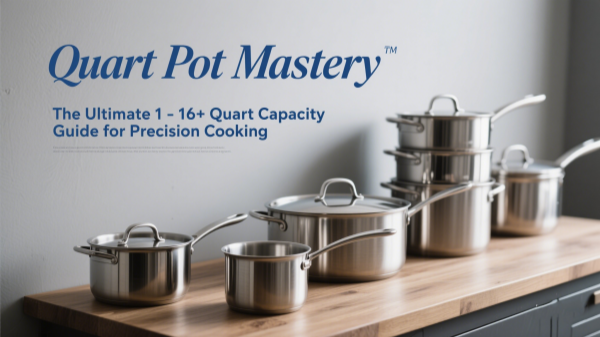
This comprehensive guide unpacks everything you need to know about choosing, using, and caring for quart pots—from tiny 1–2 qt saucepans for delicate sauces to massive 16+ qt stockpots for batch cooking. You’ll learn why capacity matters for recipe scaling and kitchen efficiency, explore the pros and cons of common materials, discover real-world use cases by quart size, and get quart-focused buying and maintenance tips that will keep your cookware performing and looking its best. All recommendations are backed by current expert insights and user-tested data.
1. Introduction
Choosing the right quart-capacity pot is more than a matter of kitchen aesthetics—it directly impacts your cooking performance, prevents boil-overs, and ensures efficient heat use. Whether you’re simmering a delicate sauce or crafting gallons of broth, understanding quart measurements helps you match cookware to recipes and household needs . In this guide, we’ll define what a quart pot is, examine common sizes and materials, explore real-world uses by capacity, and provide detailed, quart-focused buying and care tips so you can maximize your cookware investment.
2. What Is a Quart Pot?
A quart pot simply refers to any cooking vessel whose volume is labeled in U.S. quarts (1 qt ≈ 0.95 L). This standardized measurement helps cooks scale recipes accurately and choose pots that fit stove burners and kitchen storage. Historically, early American kitchens used tin quart measures for portioning liquids and serving, lending the term its culinary roots.
Quart ↔ Liter Unit Converter
3. Common Sizes & Capacity Considerations
3.1 Small Pots (1–2 qt)
1–2 qt saucepans and small pots shine when melting butter, heating soup, or preparing single-serving grains. Their compact size ensures quick heating and easy handling—ideal for apartments and small households.
3.2 Mid-Size Pots (4–6 qt)
The 4–6 qt range is the kitchen workhorse for soups, stews, grains, and family-size sides (serving 3–5 people). These pots balance capacity and manageability, fitting most stovetops without overcrowding.
3.3 Large Pots (8–12 qt)
8–12 qt stockpots and Dutch ovens excel at making broths, boiling pasta for large meals, and one-pot dishes. A 12 qt pot often emerges as the sweet spot for home cooks needing extra headspace for stirring and expansion.
3.4 Extra-Large Pots (16+ qt)
For serious batch cooking, canning, or entertaining, pots of 16 qt and above handle large volumes—crucial for preserving, brewing, or big family gatherings. Their size demands more storage and stove space, but they’re unmatched for volume tasks.
4. Materials & Construction
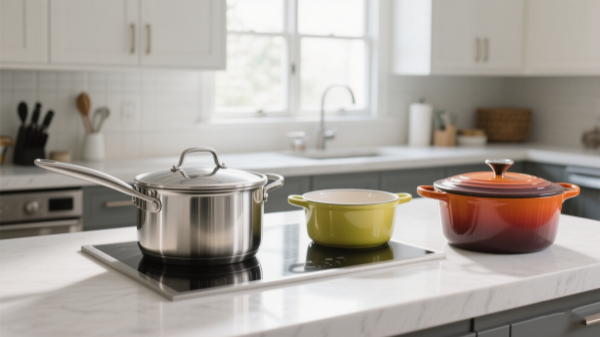
Your chosen material impacts heat distribution, maintenance, and durability. Here are the most common:
- Stainless Steel (Clad): Non-reactive and durable; often features an aluminum or copper core for even heating and quick temperature response.
- Ceramic Coating Cast Aluminum: Combines the lightweight, rapid heat conduction of a thick cast-aluminum base with a smooth, non-toxic ceramic layer that delivers reliable nonstick performance and easy cleanup.
- Enameled Cast Iron: Superb heat retention and oven-safety; heavier but ideal for long simmers and braises.
5. Key Uses & Applications
Matching pot size to task enhances efficiency and results:
- 1–2 qt: Sauces, reductions, melting, reheating single portions.
- 4–6 qt: Soups, grains, sautéing vegetables, small-scale batch cooking.
- 8–12 qt: Stocks, pasta for 6–8 servings, one-pot meals, braising tough cuts.
- 16+ qt: Canning, brewing, large event cooking, boiling seafood.
6. Advantages & Limitations
Advantages include precise capacity matching, versatility across cooking styles, and material-specific benefits like rapid heating (aluminum) or heat retention (cast iron).
Limitations involve storage and weight—larger pots consume more cabinet space and can be difficult to maneuver when full. Consider stove size and lifting comfort when selecting big-capacity pots.
7. Buying Guide & Specifications
Focus on matching quart capacity to your cooking habits:
| Capacity | Best For | Key Feature |
|---|---|---|
| 1–2 qt | Sauces, reheating | Compact footprint, easy handling |
| 4–6 qt | Family soups, grains | Balanced size for stovetop versatility |
| 8–12 qt | Stocks, pasta | High headspace, robust handles |
| 16+ qt | Canning, brewing | Large diameter, deep volume |
8. Care & Maintenance
8.1 Small Pots (1–2 qt)
Hand-wash immediately after use with warm water and mild detergent to prevent residue buildup. A soft sponge protects nonstick and stainless interiors.
8.2 Mid-Size Pots (4–6 qt)
Soak briefly after cooking starchy foods (rice, pasta) to loosen debris. Avoid abrasive pads; use plastic scrapers for stuck-on bits.
8.3 Large Pots (8–12 qt)
After making stocks, deglaze the pot with hot water and vinegar to lift fond before scrubbing. Rinse while still warm for easier cleanup.
8.4 Extra-Large Pots (16+ qt)
Use a long-handled brush to reach deep bottoms. Ensure full drainage and air-dry upside down to prevent rust in enamel-coated models.
9. Conclusion
Choosing the right quart pot transforms your cooking—from precise sauce work in a 1–2 qt saucepan to large-scale batch operations in a 16+ qt stockpot. By understanding quart measurements, selecting appropriate materials, and following size-specific care tips, you’ll maximize performance, longevity, and kitchen enjoyment. Audit your current collection, identify missing capacities, and invest in quality cookware that meets your culinary needs.
Ready to upgrade? Match your next purchase to the quart capacity that fits your recipes, and treat your pots right for years of reliable service.
The Evolution of Quart Pots: From Micro to Macro Cooking
Marble-Coated Cookware: Where Tradition Meets Tech in Modern Kitchens