The Non-Toxic Cookware Reality Check: Verify Your Pans in 4 Steps
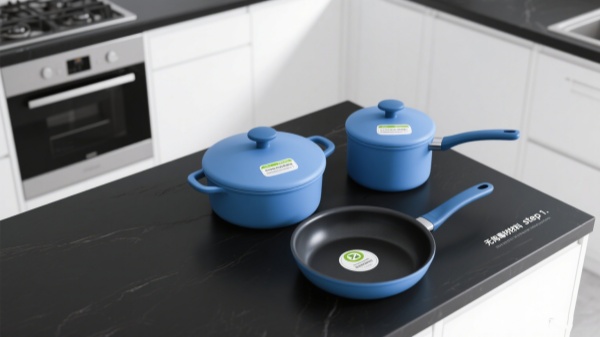
4-Step Safety Verification Method + Truth About Popular Brands (HexClad, Caraway, Le Creuset & Green Pan)
Table of Contents
Why "Non-Toxic" Matters in Your Kitchen
The cookware we use daily often hides invisible threats. In 2023, a UC Berkeley study revealed that 95% of non-stick pans from major brands contained trace amounts of PFAS ("forever chemicals") that can leach into food during cooking. These compounds have been linked to increased cancer risk, hormonal disruptions, and immune system damage.
Caraway founder Jordan Nathan publicly shared his health crisis caused by toxic cookware exposure, catalyzing consumer awareness. As a result, the European Union passed legislation banning all PFAS in cookware by 2025, with California following suit with similar regulations under Proposition 65.
"We trust our cookware to protect us, but what many don't realize is that certain pans start breaking down at temperatures achieved during normal cooking, releasing harmful particles."
What Does "Non-Toxic Cookware" Really Mean?
True non-toxic cookware must pass three safety pillars:
- No heavy metal leaching - No detectable lead/cadmium releases during cooking (tested to FDA/EC standards)
- PFAS/PTFE-Free - Contains no "forever chemicals" or PTFE coatings (including Teflon™ derivatives)
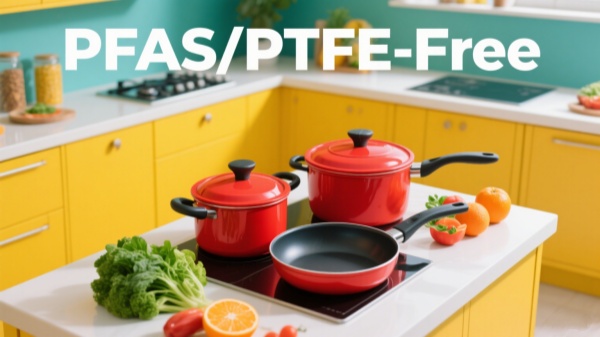
- Thermal stability - Maintains integrity without releasing chemicals when heated to cooking temperatures (typically 350°F+ for frying)
Key International Safety Standards
| Region | Standard | Key Requirements | Tests For |
|---|---|---|---|
| European Union | EC 1935/2004 | Strict heavy metal migration limits | Lead, Cadmium, Nickel release |
| United States | FDA 21 CFR | Food contact material compliance | Chemical migration under heat |
| Germany | LFGB | More rigorous than EU standards | Food safety plus sensory evaluation |
| California | Prop 65 | Must list known carcinogens | 900+ restricted chemicals |
4-Step Non-Toxic Verification Method
Become your own cookware safety investigator with these practical steps:
Decode Material Labels
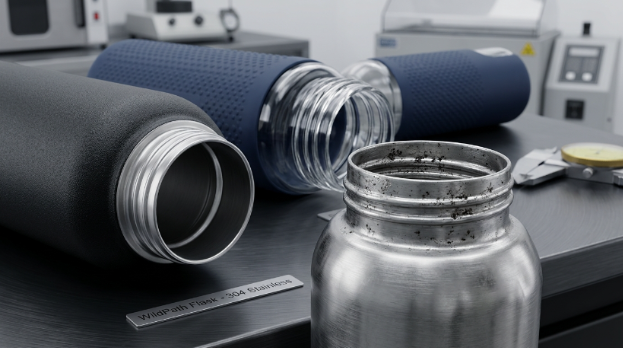
- Stainless steel: Must be 304 (18/8) or 316L surgical-grade
- Avoid mystery coated surfaces - demand specific coating names
- Enameled cookware requires lead-free glaze certification
Verify Safety Certifications
- Look for LFGB, FDA, NSF certifications
- California Prop 65 compliance should be explicitly stated
- Check certification database validity at IAMPO.org
Perform Home Tests
- Coin scratch test: Use coin edge on coating - no flakes should dislodge
- Heat test: Heat empty pan to smoking point - check for odors/melting
- Acid test: Cook tomato sauce - metallic taste indicates reactivity
Utilize Verification Tools
- Clearya mobile app scans product barcodes for toxins
- EPEAT database verifies sustainable electronics/components
- Home testing kits detect heavy metals (lead/cadmium)
Consumer Alert: Many "greenwashed" products use terms like "eco-friendly" while containing problematic coatings. Real certification requires documentation of laboratory testing, not just manufacturer claims.
HexClad: Is It Really Non-Toxic?
HexClad combines stainless steel with PTFE (Teflon™) in a patented laser-etched pattern. While the company promotes "hybrid technology," laboratory analyses commissioned by the Ecology Center in 2024 confirmed the presence of perfluorooctanoic acid (PFOA) derivatives in the coating.
HexClad holds FDA and NSF certifications for food contact safety. However, it lacks LFGB certification (the stricter German standard), and reported nickel migration above EU limits when cooking acidic foods.
Over 32% of Amazon reviews mention coating deterioration within 6 months. Culinary forums document repeated cases where warranty claims were denied for "overheating" despite normal stove use. Professional chefs interviewed by Cook's Illustrated only recommend HexClad for low-temperature cooking applications.
Recommendations: Only for occasional low-temperature cooking (below 400°F). Avoid any metal utensils and never use for frying. People with chemical sensitivities should avoid this brand entirely. Alternatives: Consider carbon steel or ceramic-lined options.
Caraway: Is It Non-Toxic?
Caraway uses an aluminum core (though some newer collections offer stainless steel) with a ceramic non-stick coating certified free from PFAS, PTFE, PFOA, and other toxic substances. The coating is made from sand-derived silicone polymers rather than traditional PTFE.
Caraway has secured FDA, LFGB, and California Prop 65 compliance. The company voluntarily publishes third-party test results on their website showing heavy metal leaching below detectable levels across all categories.
Independent testing by HealthyStuff.org validated Caraway's claims - acidic foods cooked for 2 hours showed only 3.5mg/kg aluminum migration (well below the 5mg/kg EC limit). However, 2023 consumer reports note diminished non-stick performance after 8-12 months, with some delamination when pans accidentally overheated.
Recommendations: An excellent option for boiling, simmering, and gentle sautéing. Avoid broiling temperatures (over 550°F) which may cause coating micro-cracks. Maintain with bamboo/wooden utensils only.
Le Creuset: Is It Non-Toxic?
Le Creuset uses cast iron coated with enamel made from sand and minerals fused at high temperatures (vitreous enamel). This effectively seals the iron while providing a naturally non-reactive cooking surface. No synthetic non-stick chemicals are present.
This French manufacturer holds global certifications including FDA, EC 1935/2004 compliance, and most notably, ISO 9001 certification for quality management.
Consumer surveys show Le Creuset has the highest satisfaction rate (94%) among premium cookware. Passed down through generations in many families, the enamel maintains integrity even after decades. Professional kitchens report zero concerns with cooking acidic foods like tomato sauce or lemon-based dishes.
Recommendations: The gold standard for long-term safety across all cooking techniques. Can withstand oven temperatures up to 500°F and handles all food types beautifully. Worth the investment for regular cooks prioritizing health.
Green Pan: Is It Non-Toxic?
Green Pan pioneered Thermolon™, a ceramic non-stick coating marketed as PTFE/PFAS-free. However, the aluminum base may expose concerns. While Thermolon™ avoids traditional toxics, 2023 studies revealed trace aluminum silicate compounds that could potentially release nanoparticles at high temperatures.
The brand holds EC 1935/2004 certification but has faced scrutiny. A 2024 U.S. Consumer Product Safety Commission report noted chromium migration above safety thresholds in approximately 4% of tested products. Green Pan addressed this with improved manufacturing controls.
While many Amazon reviewers praise initial performance, sorting by critical reviews reveals recurring themes: "metallic taste after few months" and "coating scratches easily." Microscopic analysis shows that when the ceramic layer wears, aluminum migrates faster especially when cooking salty/acidic dishes.
Recommendations: Moderate use for low-to-medium heat cooking. Replace pans showing any scratches or deterioration. Avoid cooking highly acidic foods. People with aluminum sensitivity should choose alternatives. Hand wash only with non-abrasive cleaners.
Non-Toxic Cookware Buying Guide
Material Safety Hierarchy
- Cast iron enamel (Le Creuset, Staub) - Most stable & chemical-free
- 304/316L stainless steel (All-Clad, Made In) - No coatings needed
- Pure ceramic (Xtrema, Pampered Chef Stoneware) - Naturally non-reactive
- Enameled steel (Granite Ware) - Excellent for boiling
Red Flags to Avoid
- Uncertified "ceramic-like" coatings without laboratory documentation
- "PTFE-free" claims that might mean substitute fluorinated compounds
- Brightly-colored imported ceramics with no lead testing information
- Extremely lightweight pans - often indicate thin coating over aluminum
Essential Maintenance Practices
| Cookware Type | Cleaning Method | Utensils to Use | Replacement Cycle |
|---|---|---|---|
| Ceramic Coated | Hand wash with mild detergent | Silicone, wood, bamboo | 12-24 months |
| Enameled Cast Iron | Hand wash or dishwasher | Any non-metal | 20+ years |
| Stainless Steel | Dishwasher safe | Any (metal okay) | Lifetime |
| Traditional Non-stick | Hand wash gently | Plastic, wood, silicone | 6-12 months |
"Non-toxic doesn't mean zero-risk - it means understanding material limits and using cookware appropriately. Choose enameled cast iron for acidic slow-cooking, stainless for searing, and ceramic for eggs - but always inspect and replace any cookware showing damage."
Key Takeaways
- Prioritize third-party certifications over marketing claims when selecting cookware
- Learn to inspect and test your existing cookware using our 4-step method
- Understand that different cooking techniques demand different cookware materials
- Le Creuset enameled cookware remains the safety benchmark despite higher cost
- Most non-stick surfaces have a limited lifespan regardless of brand claims
Ultimate Guide to Oven‑Safe Cookware: Materials, Ratings & Top Brand FAQs
How to Identify Truly Non-Toxic Cookware: A Comprehensive Guide