• image English
  • image 简体中文
  • image Deutsch
  • image 日本語
  • image Français
  • image Pусский
  • image Español
  • image العربية
  • image lingua italiana
  • image Portugues
qr Code Url

Scan qrcode to view mobile website

Data is empty
0
Member Center
Exit
Solamex Houseware
    Home /Blog /Buying Guides & Care Tips /The Truth About "Granite" Cookware: Is It Safe & Truly Worth Your Money? /

    The Truth About "Granite" Cookware: Is It Safe & Truly Worth Your Money?

    sbB5WHcRyX

    Tired of non-stick pans that scrape, flake, and lose their magic after just a few months? If you've been searching for a healthier, more durable alternative, you’ve likely seen them: beautiful, speckled pots and pans marketed as "granite cookware." But what's the real story behind that stone-like finish? This guide cuts through the marketing hype to give you the honest truth.

    We'll dive deep into what granite cookware is actually made of, tackle the all-important safety question, and stack it up against other kitchen workhorses. By the end, you'll know exactly what you're buying and be able to decide if it's the right choice for your kitchen.

    Unveiling the Mystery: What Exactly Is Granite Cookware?

    Let's get the biggest misconception out of the way first: granite cookware is not carved from a solid block of granite. It would be incredibly heavy, brittle, and a terrible heat conductor. The name is purely about aesthetics.

    Think of it like wood-look tile—it mimics the appearance, not the substance. In reality, granite cookware consists of two main parts:
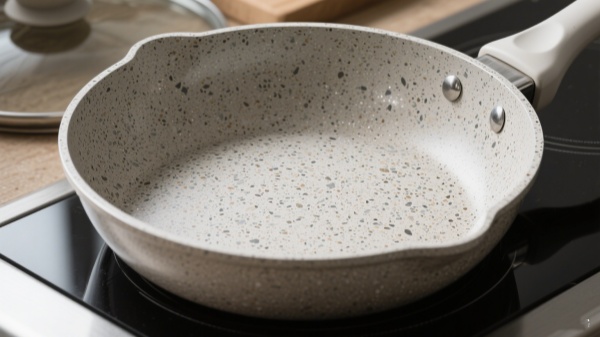
    The Core: The body of the pan is typically made from a highly conductive metal, usually aluminum or carbon steel. This ensures the pan is lightweight and heats up quickly and evenly, which is exactly what you want for everyday cooking.
    The Coating: The "granite" part is a multi-layered, non-stick coating applied over the metal core. This coating is a form of enamel or ceramic, infused with speckles to create the signature stone-like appearance. The goal is to create a cooking surface that's tougher and more durable than traditional Teflon (PTFE) coatings.
    granite coating is a form of enamel or ceramic infused with speckles

    So, when you buy granite cookware, you're essentially getting a high-performance non-stick pan with a reinforced, visually appealing surface.

    The Safety Question: Is Granite Cookware Non-Toxic?

    Now for the million-dollar question. After all, a pan's performance means nothing if it's not safe for your family. The good news is that high-quality granite cookware from reputable brands is perfectly safe.

    The main concerns with non-stick cookware have historically been about chemicals like PFOA, lead, and cadmium. Here's the breakdown:

    PFOA, Lead & Cadmium-Free: Modern manufacturing standards mean that virtually all trusted brands produce granite cookware that is 100% free of these harmful substances. Always look for a "PFOA-Free" label for peace of mind.
    What about PTFE? Many granite coatings, like Teflon, are based on PTFE. On its own, PTFE is an inert and stable compound that's safe for cooking. The danger only arises if the pan is severely overheated (above 500°F / 260°C), at which point the coating can release fumes. The simple solution? Never heat an empty pan and stick to low-to-medium heat, which is all you need for most non-stick cooking anyway.

    Your safest bet is to treat it with care. If the coating becomes deeply scratched or starts to peel, it's time to replace the pan. This isn't just a safety precaution—it's also because a damaged surface loses its non-stick properties.

    A Balanced Look: The Pros and Cons of Granite Cookware

    Now that we know what it is and that it's safe, how does it actually perform in the kitchen? Let's be real—no cookware is perfect. Here's an honest look at where granite pans shine and where they fall short.

    The Good Stuff (Pros)
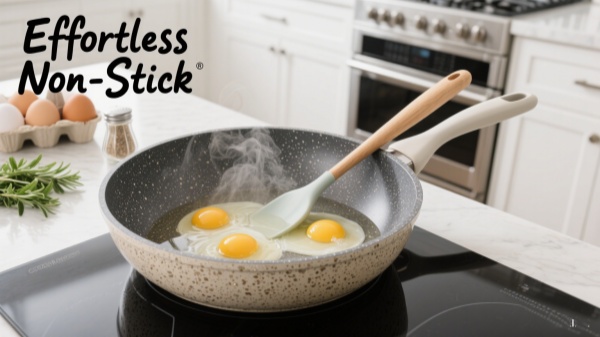
    Effortless Non-Stick: Eggs slide right off, and cleanup is often as simple as a quick wipe with a paper towel. You can cook with significantly less oil or butter.
    Effortless Non-Stick of Granite Cookware
    Even Heating: The aluminum core does its job beautifully, eliminating hot spots that burn your food.
    Surprisingly Lightweight: Unlike its cast iron cousins, granite cookware is easy to handle, flip, and move around the kitchen.
    Tougher Than Average: While not indestructible, the reinforced coating is generally more resistant to scratches than basic non-stick pans.
    Modern Aesthetics: Let's face it, they look great on the stovetop.

    The Not-So-Good Stuff (Cons)

    It's Still a Coating: At the end of the day, the non-stick surface has a finite lifespan and will eventually wear out, unlike cast iron or stainless steel which can last generations.
    Not for Extreme Heat: This is not the pan for searing a steak at ripping-hot temperatures. High heat will degrade the coating over time.
    Requires Gentle Care: Metal utensils are a no-go. Stick to wood, silicone, or nylon to protect the surface.
    Quality Varies Wildly: The market is flooded with options. A cheap, no-name pan will likely disappoint you quickly, while a quality brand-name set is a much better investment.

    Kitchen Showdown: Granite vs. Other Popular Cookware

    To really understand its place in the kitchen, let's see how granite cookware stacks up against the competition. This head-to-head comparison should make your decision much clearer.
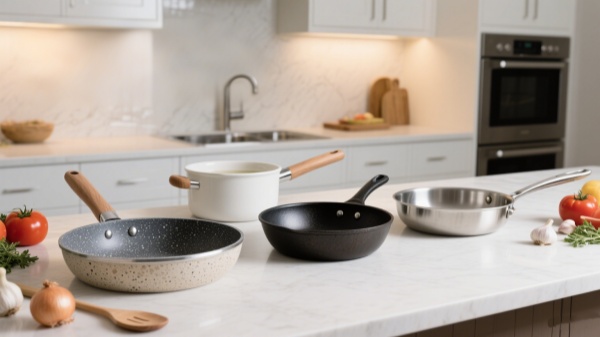
    granite cookware compared with Ceramic Cookware Cast Iron Stainless Steel

    Feature Granite Cookware Ceramic Cookware Cast Iron Stainless Steel
    Non-Stick Ability Excellent Excellent (but can fade faster) Good (when well-seasoned) Poor (requires technique)
    Weight Light Light Very Heavy Medium
    Maintenance Low Medium High (seasoning required) Low
    Heat Tolerance Medium Medium Extremely High High
    Durability Good (coating wears over time) Fair (can chip or stain) Excellent (can last forever) Excellent (can last forever)

    Your Guide to Buying & Caring for Granite Cookware

    Ready to make the investment? Here's how to choose a great pan and keep it performing like new for as long as possible.

    How to Choose the Best Granite Cookware

    Check the Core: Look for a thick, heavy-gauge aluminum core. A flimsy pan will warp.
    Coating Layers: More is better. Brands that advertise 3, or even 5, layers of coating are typically more durable.
    Handles & Lids: Ensure handles are sturdy, comfortable, and oven-safe if you need that feature. A tight-fitting glass lid is a huge plus.
    Induction Compatibility: If you have an induction cooktop, check for a magnetic steel plate on the bottom of the pan.
    Read Reviews: See what other home cooks are saying. Long-term reviews are especially valuable.
    Size Selection: Choose stock pot and cooking pan sizes that match your cooking needs. For stock pots, consider 6-quart options for small families or 8-quart models for larger households and batch cooking. Standard sizes like 4-quart work well for everyday meals, while larger stock pot sizes (8+ quart) are ideal for soups, stews, and entertaining. Consider your storage space and typical serving portions when selecting sizes.

    The Care and Keeping Secrets

    First Use Seasoning: Before first use, wash the pan, dry it, and wipe a thin layer of cooking oil on the surface. Heat it gently for a minute, then let it cool and wipe away excess oil.
    Utensils Matter: Never use metal. Silicone, wood, and nylon are your pan's best friends.
    Master the Heat: Use low to medium heat. There's rarely a need to crank it to high.
    Cool Down Before Washing: Plunging a hot pan into cold water can cause warping. Let it cool down first.
    Gentle Cleaning: Hand wash with a soft sponge and dish soap. Avoid abrasive scrubbers and harsh detergents. Most are "dishwasher safe," but handwashing will dramatically extend the pan's life.

    Frequently Asked Questions (FAQ)

    Q: Can you put granite cookware in the oven?

    A: It depends on the brand and model. Always check the manufacturer's instructions. The weak point is often the handle, which may have a lower temperature limit than the pan itself.

    Q: Is granite cookware compatible with induction cooktops?

    A: Only if it's specifically designed for it. The pan needs a magnetic base to work with induction. Look for an "induction compatible" symbol on the packaging or bottom of the pan.

    Q: What should I do if the coating on my granite pan starts to flake?

    A: For safety and performance, you should stop using it immediately and replace it. Once the coating is compromised, it loses its non-stick quality and there's a risk of small particles getting into your food.

    The Final Verdict: Is Granite Cookware Right for You?

    So, what's the bottom line? Granite cookware is an excellent choice for the everyday home cook who values convenience, easy cleanup, and healthy, low-oil cooking.

    It's the perfect workhorse for your morning eggs, sautéed vegetables, and pan-fried fish. However, if you're a culinary enthusiast who loves to sear steaks at blazing temperatures or wants a pan to pass down to your grandchildren, you'll still want a cast iron or stainless steel skillet in your arsenal.

    Ultimately, the best pan is the one you enjoy using day in and day out. If you're looking for a beautiful, user-friendly non-stick that's a clear step up from the basic models, a quality granite pan is a fantastic and worthwhile addition to your kitchen.

    Solamex Logo

    Solamex — Wholesale Pots and Pans Expertise

    Solamex offers a comprehensive range of wholesale pots and pans, combining durable materials, precise craftsmanship, and flexible product customization. From premium stainless steel to advanced nonstick lines, our catalog is built for both retail distribution and demanding commercial kitchens — ensuring consistency in performance and presentation.

    Request Wholesale Quote
    Release time: 2025-08-27

    Cookware for Deep Frying: The Practical Buyer’s Guide to Pots, Pans, Safety & Long Life

    Granite Cookware: Safety, Performance, and Buying Guide
    Related blog
    2026-09-15 |Solamex Home
    Why a Good Lid Matters? - The Key to Better Flavor & Faster Cooking!
    2026-09-04 |Solamex Home
    What Is a Grill Pan and What Is It Good For? A Guide to Indoor Grilling!
    2026-09-04 |Solamex Home
    The Benefits of Using a Reusable Water Bottle! The Ultimate Guide!
    2026-09-03 |Solamex Home
    Deep Pots vs. Wide Pots. Which One Should You Buy for Your Cooking Style?

    Email:sales@solamex.com.cn

    MP:+86-15258995911

    Tel:+86 571 88687559

    Office Add. (Hangzhou) :A6-406, Phase I, Cainiao Smart Valley, Yuhang, 311121,Hangzhou,Zhejiang, PRC

    (D Exit of Jinxing Station, Metro Line 5)

    Fty Add.(Wuyi) : No. 11, Baihua Mont. Industrial Dist., Wuyi, 321200, Zhejiang, PRC

    Home
    Products
    About
    Contact
    Download
    SiteMap

    Copyright © 2025 Solamex Ltd. All rights reserved.

    (10510)
    0
    Service

    WhatsApp
    +8615258995911
    Wechat
    19941411209
    Skype
    luxiaochang
    Phone
    +8619941411209
    Email
    sales@solamexhome.com
    Inquiry
    Inquiry
    Top